

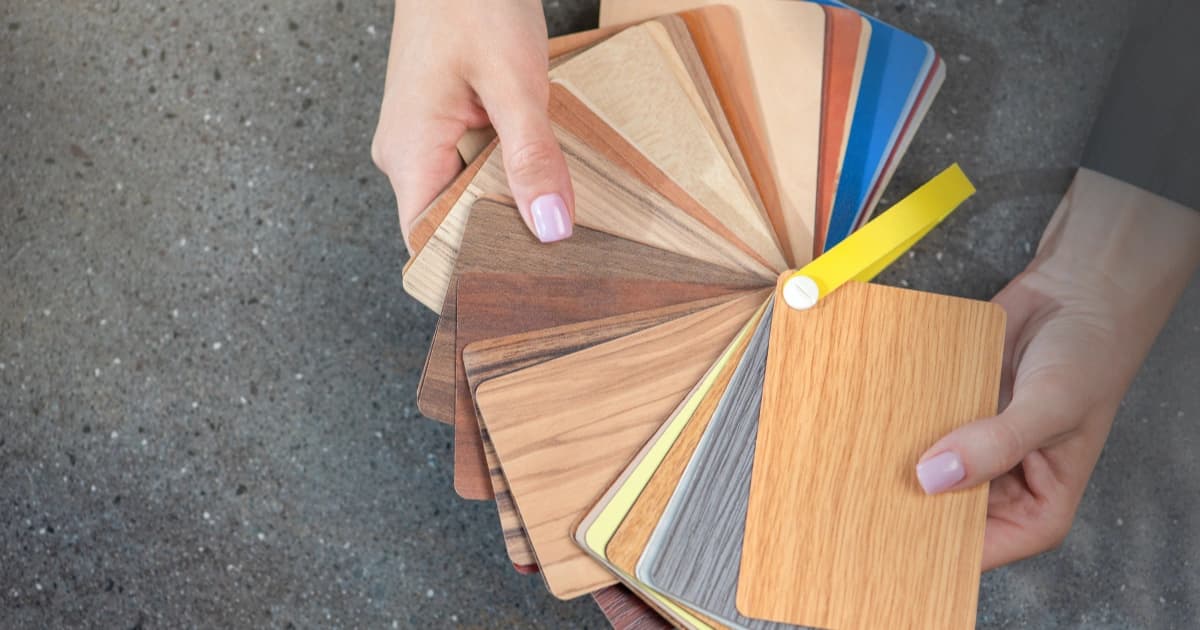
How surface finishes shape character, tactility, and spatial expression
In office furnishing, surface materials play a critical role in both visual identity and long-term performance. While the core structure of office furniture is commonly made from materials such as plywood, MDF (Medium Density Fiberboard), or particle board, it is the coating material that determines how the furniture looks, feels, and withstands daily use.
Two of the most widely used coating materials in office furnishing are veneer and High Pressure Laminate (HPL). Each offers distinct characteristics that suit different design intentions and functional requirements.
Veneer
Veneer is a thin layer of natural wood, typically ranging from 0.24 mm to 0.6 mm in thickness, sliced directly from logs. Because it uses real wood, veneer delivers a warm, authentic appearance that closely resembles solid wood—without the limitations of working with large, heavy timber.
Veneer allows for expansive surfaces and curved forms, making it a popular choice for executive furniture and spaces that aim to feel refined and exclusive. Its natural grain patterns bring depth and character that cannot be fully replicated by printed finishes.
There are two common finishing approaches for veneer. Open-pore finishes preserve the natural texture of the wood, allowing the grain to remain visible and tactile. Closed-pore finishes, on the other hand, create a smoother surface with a more polished look.
Despite its visual appeal, veneer requires careful use and maintenance. It is more susceptible to scratches, peeling, and heat exposure, making it better suited for low-impact areas or furniture that prioritizes aesthetics over heavy-duty use.
High Pressure Laminate (HPL)
HPL is a composite material made from layers of kraft paper and decorative paper bonded with resin, processed under high pressure and temperature. This manufacturing process results in a surface that is highly durable, flexible, and consistent in quality.
One of HPL’s key advantages is its resistance to wear, impact, and moisture. It performs well in high-traffic environments and is easier to maintain compared to natural materials. The elasticity of HPL also allows it to be formed more easily, supporting efficient furniture production.
While HPL finishes across brands may appear similar, quality can be evaluated through several factors: abrasion resistance (often measured in cycles), precision of cut edges for clean assembly, and low or zero formaldehyde content, which is essential for healthier indoor environments.
Visually, HPL offers a wide range of colors, textures, and patterns—including wood-inspired finishes—making it a versatile choice for contemporary and functional office spaces.
Choosing the Right Finish
Selecting the right coating material depends on the atmosphere you want to create, whether it is classic, contemporary, minimalist, or elegant. It also depends on how the furniture will be used, how often it will be cleaned, and the level of durability required.
By understanding the characteristics of veneer and HPL, designers and decision-makers can make informed choices that balance aesthetics, performance, and long-term value in office environments.
Vinoti | VIVERE Commercial