

Why average occupancy can hide what a workplace needs
Picture an office at 10 a.m. Several desks are empty, two colleagues are looking for somewhere to review a proposal, and a video call is taking place within earshot of everyone else. The spaces people need are already are already occupied. Adding another row of desks would leave those needs unresolved.
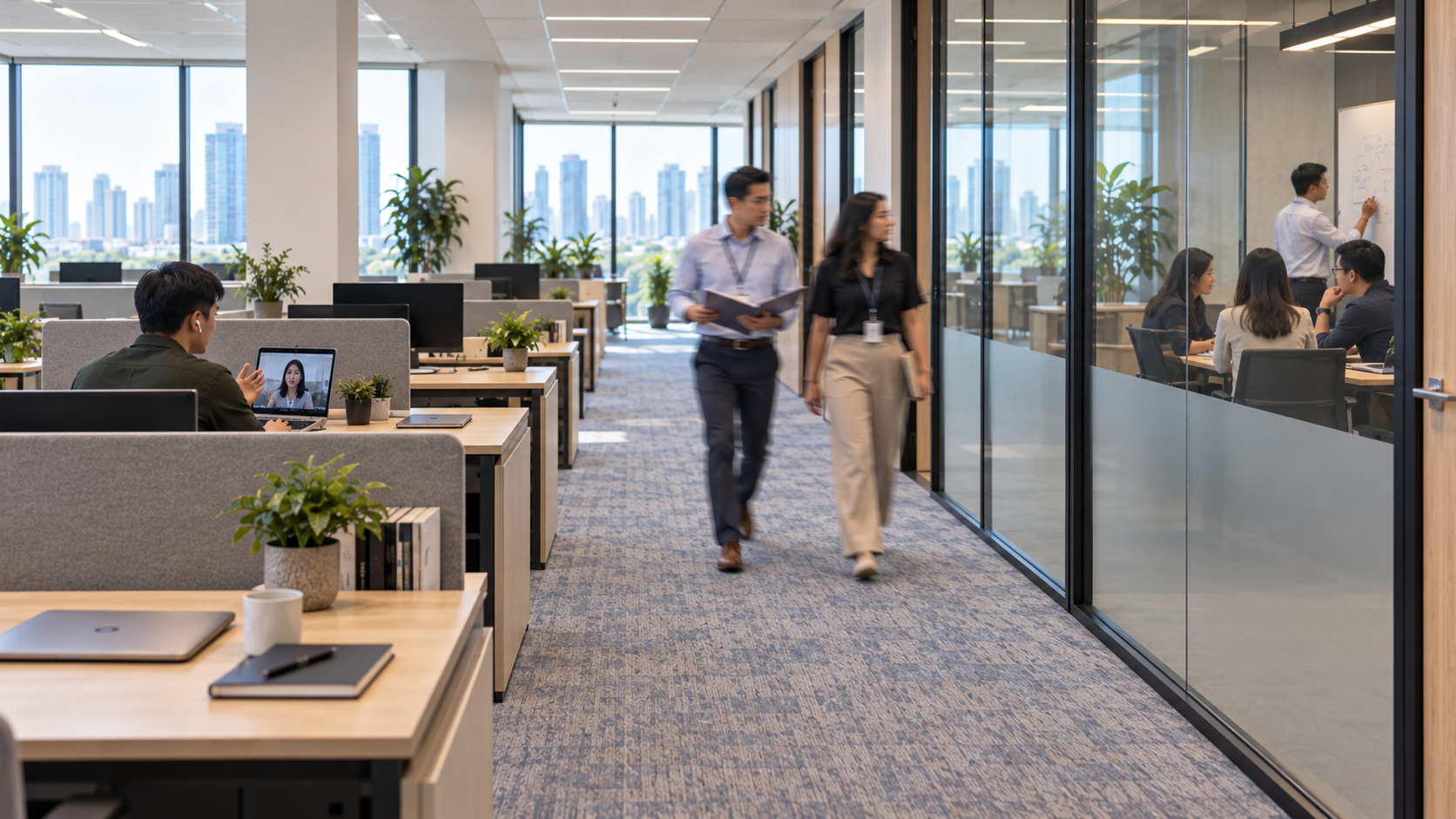
This is the risk of making workplace decisions from a single occupancy figure. An average describes overall use. It can conceal the pressure that builds at particular times, or around particular activities.
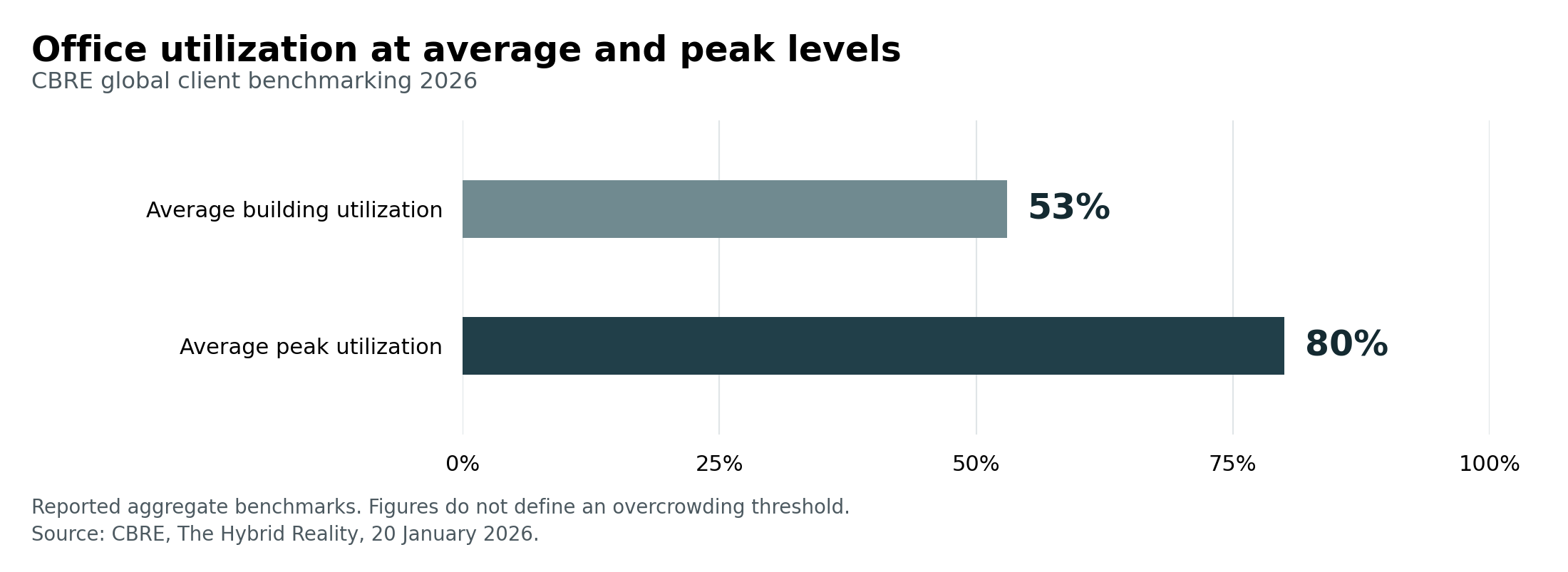
CBRE's 2026 global client benchmarking reports average building utilization of 53% and average peak utilization of 80%. The 27-percentage point gap illustrates why planning needs to account for busy periods. These are benchmarks across respondents; 80% is not a universal overcrowding threshold.
The practical question is what becomes difficult when more people arrive. Is it finding a workstation, joining a call privately, or getting a room large enough for the team? Each answer points to a different decision.
Gensler's 2026 Global Workplace Survey adds another perspective. Among 16,459 office workers across 16 countries, two-thirds reported adapting their workspace to compensate for shortcomings. Meeting space availability and noise remained unresolved of challenges. Spare floor area, on its own, tells us little about whether people can find a suitable place to work.
A useful starting point is to observe a representative for a few weeks, including recurring busy periods. Compare room bookings with actual use. Note the number of people using each room and ask employees which activities they struggle to accommodate. A room that looks fully booked may be empty between calls; an occupied room may be serving a purpose its size and setup were never intended for.
Use those observations to decide what to change. If individual calls repeatedly occupy larger meeting rooms, asses whether smaller enclosed settings would release capacity. If quick team discussions spill across desk areas, consider a nearby shared worktable with appropriate acoustic separation. If workstations reach capacity, review desk provision and team attendance patterns together.
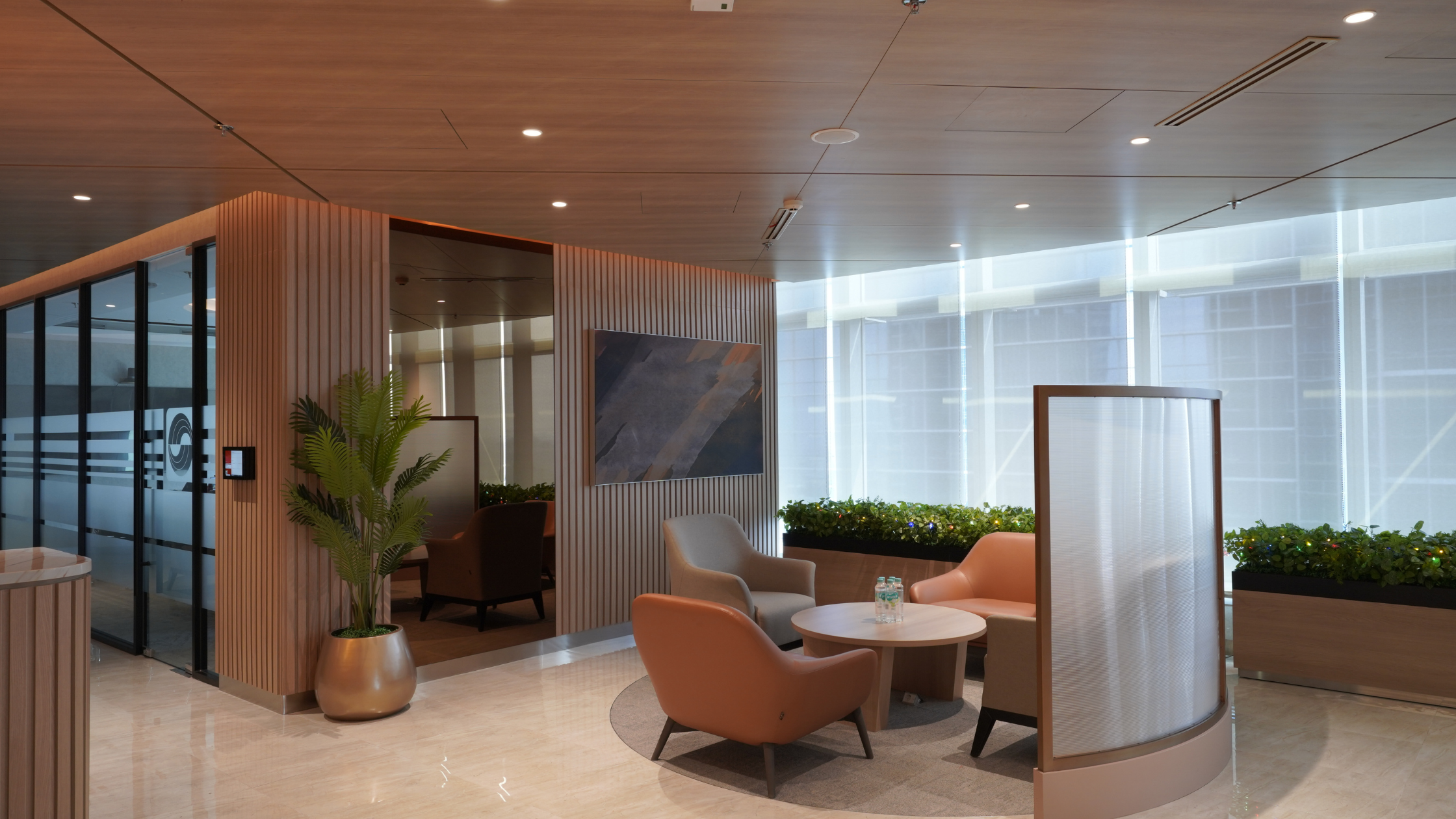
The settings also need to work in relation to one another. Placing a discussion table besides people who need sustained concentration can simply move the problem. Furniture selection, location, and acoustic treatment should be considered together, with enough room for people to move through space comfortably.
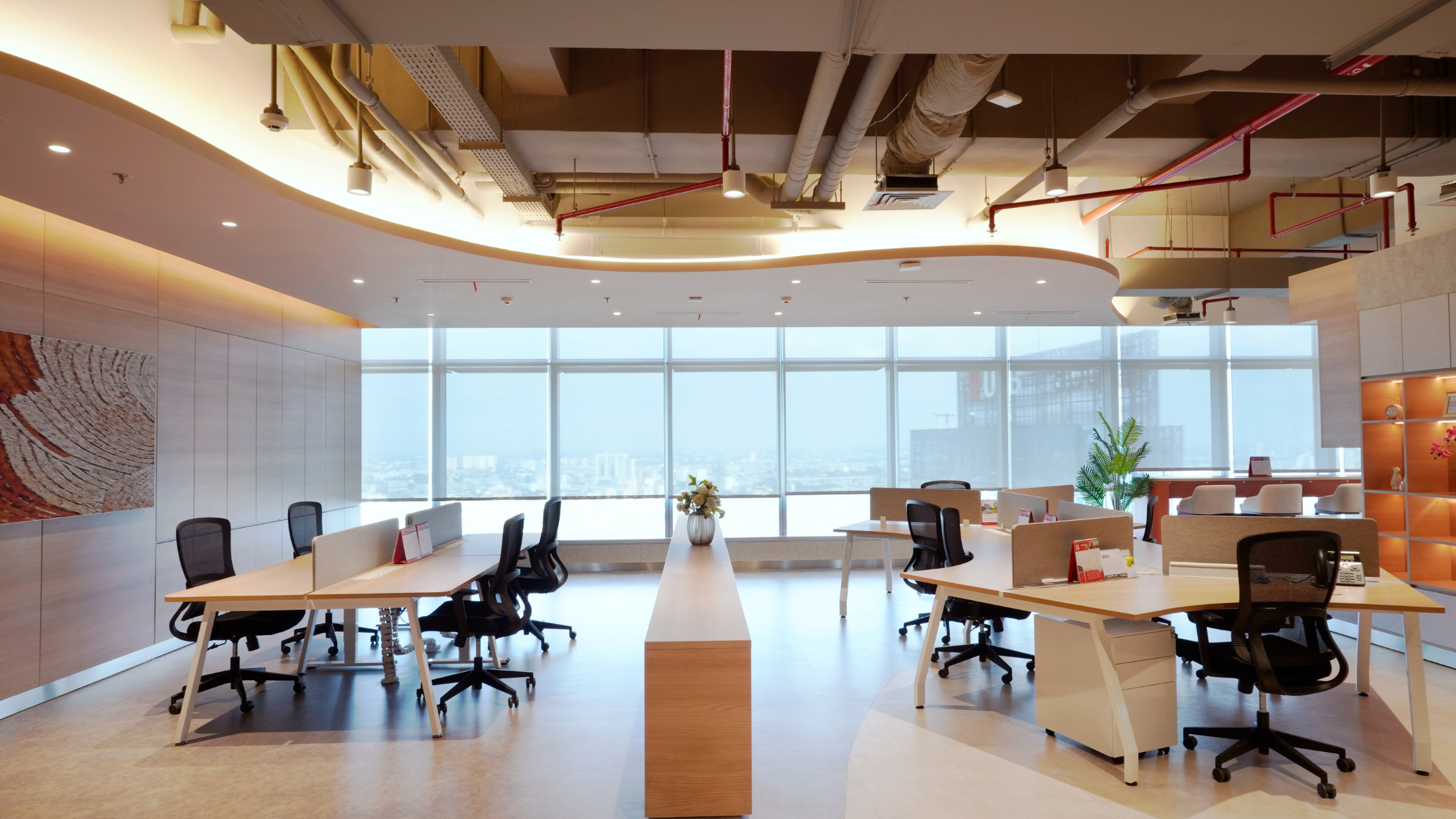
Some areas can support more than one activity. A work café can accommodate an informal conversation or occasional laptop use when its seating, table heights and power access suit those tasks. Confidential conversations require suitable privacy. Define what each area can support so that flexibility remains useful on a busy day.
Before committing a wider change, try the proposed setting where demand has been observed. Review it during the next busy period. Are people using it? Has access to the original room improved? Have conversations displaced concentration nearby? The answers help determine whether to repeat, adjust, or reconsider the change.
At Vinoti, our workplace offering brings together workstations, seating and supporting solutions for different ways of working. These choices belong in the same conversation: what people need to do, where they can do it, and how the settings fit together across the office.
Vinoti | VIVERE Commercial
Sources and figure details
Published 20 January 2026. Reports 53% average building utilization and 80% average peak utilization. The chart uses those two aggregate figures on a common 0 to 100% scale. The 27 percentage point difference is calculated from the reported values.
CBRE 2026 Global Workplace and Occupancy Insights
The series describes global data from CBRE clients representing 303 million square feet of office space. The figures provide international context for the article.
Gensler 2026 Global Workplace Survey
Survey of 16,459 full-time office workers across 16 countries, conducted from 22 July to 12 September 2025. Respondents worked for organizations with at least 100 employees. The article draws on reported workspace adaptations and unresolved meeting space and noise issues.
Figure alt text: Bar chart showing 53% average building utilization and 80% average peak utilization in CBRE's 2026 global client benchmarking.