

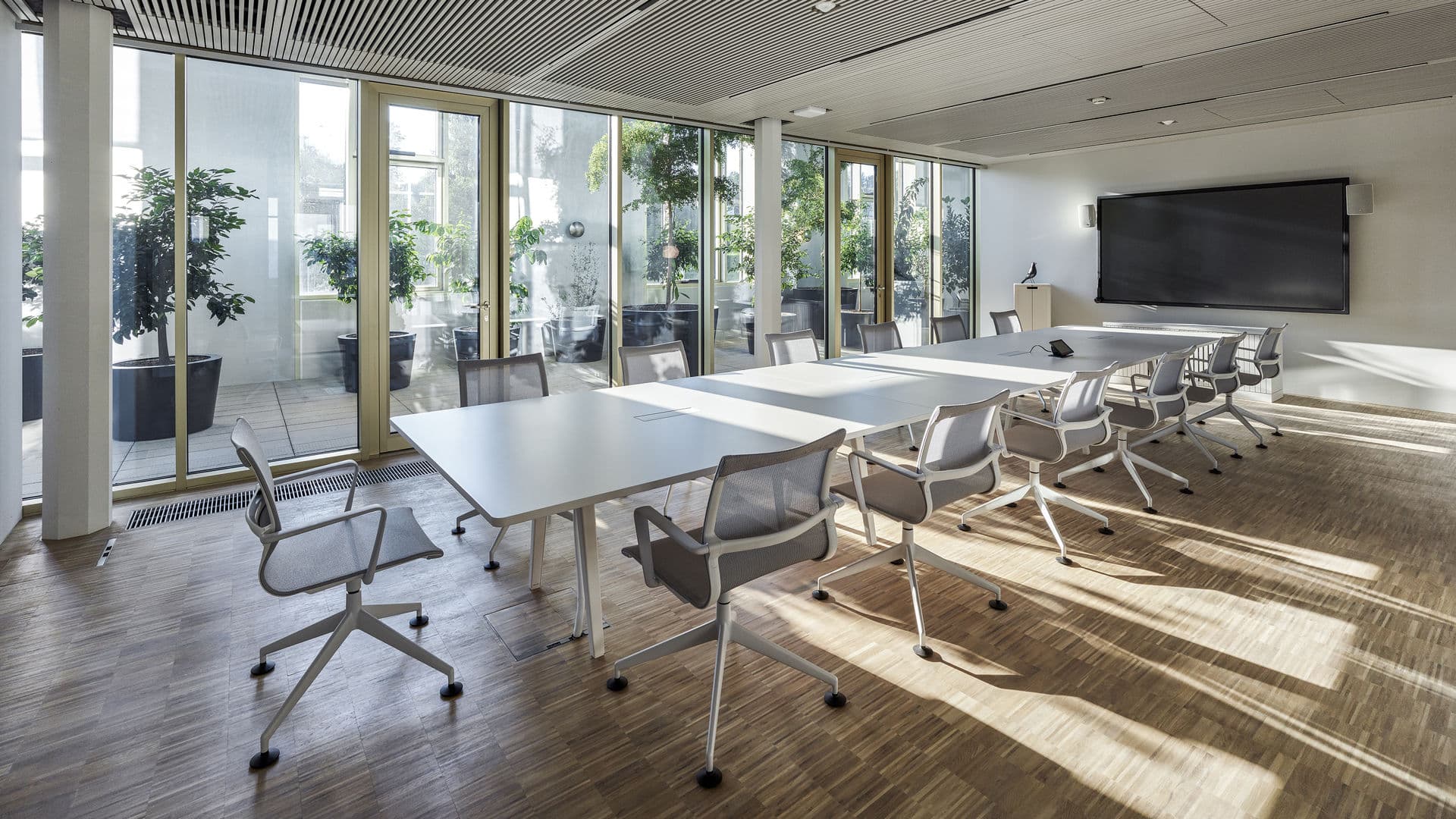
Alberto Meda’s Physix for Vitra explores how a restrained office chair can accommodate movement through the relationship between its parts.
A photograph can show the outline of an office chair. It tells us much less about what happens when someone sits down, leans back or changes position. That gap between appearance and experience is where furniture design becomes particularly interesting.
Physix, designed by Alberto Meda for Vitra in 2012, invites that closer reading. Its continuous seat and back are formed by stretching a single textile panel between two side members. The outline is spare, yet the construction brings together three distinct elements: a flexible frame, an elastic cover and a stabilising mechanism. Vitra describes their interaction as the basis of the chair’s dynamic sitting experience.
The design question lies in that interaction. Flexibility alone is not a complete answer to support. A surface that yields needs a structure that determines how it yields. A moving assembly needs something to regulate its movement. Physix makes the relationship between these behaviors central to its design.
This offers a useful way to think about simplicity. Counting visible parts tells us little about how carefully an object has been resolved. A restrained form can demand considerable coordination: each element has to perform its role while remaining compatible with the others. The designer’s work sits in those relationships.
Textile is particularly interesting here. In furniture, fabric is often selected late in the process, as a decision about color, texture or finish. In Physix, the stretched panel is fundamental to the seat’s construction. Its role begins well before choosing how the chair will look in a room.
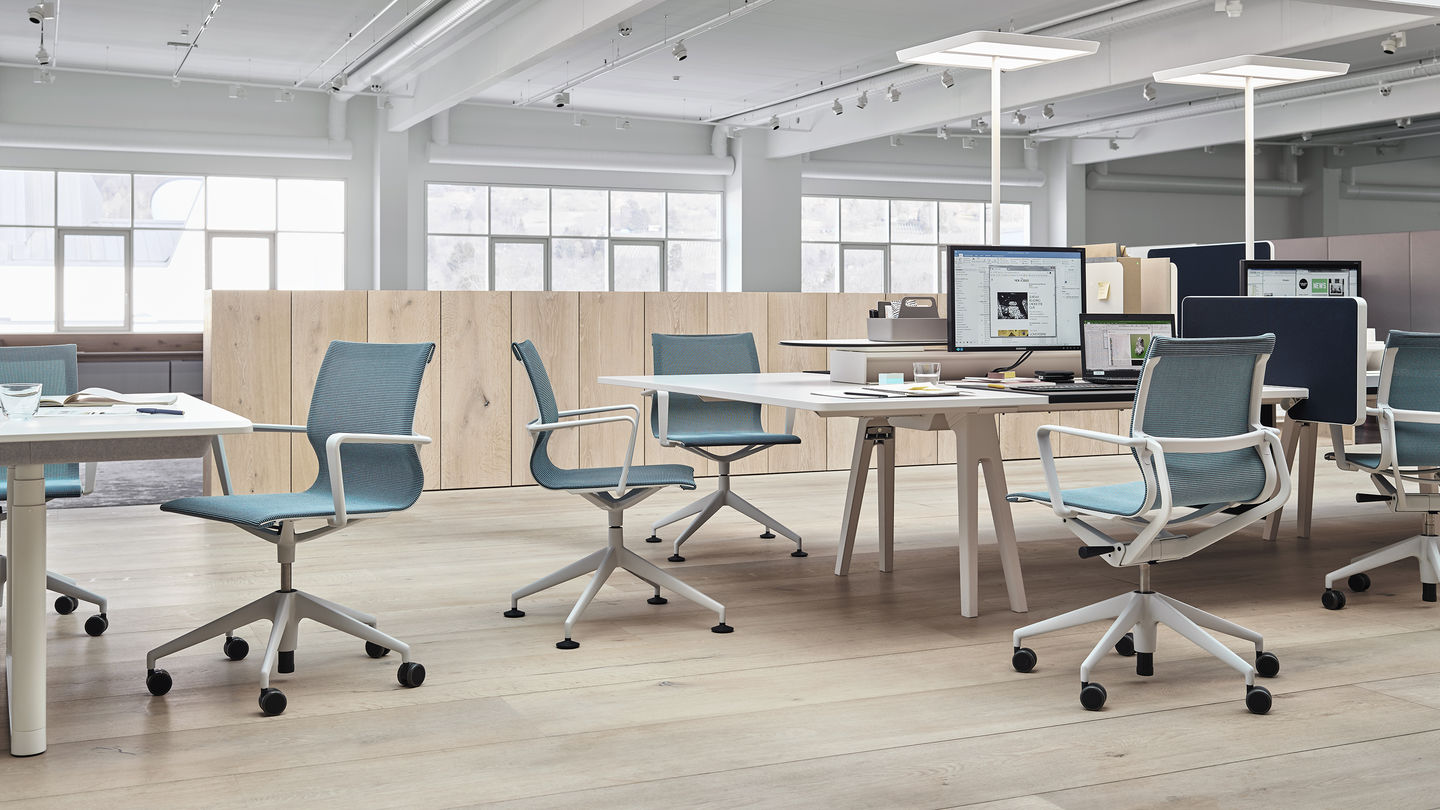
For designers, this changes the conversation around materials. Alongside “What does it look like?”, there is another question: “What is it being asked to do?” A material choice can shape the entire logic of an object, influencing its form and the way its components work together.
The same care is needed when moving from a product image to a specification. Vitra distinguishes between three Physix models. The office swivel chair has synchronised movement, adjustable backrest resistance and height adjustment. Physix Conference swivels but has no height adjustment, while Physix Studio provides swivel and height adjustment in a reduced configuration. Their shared appearance does not make them functionally identical.
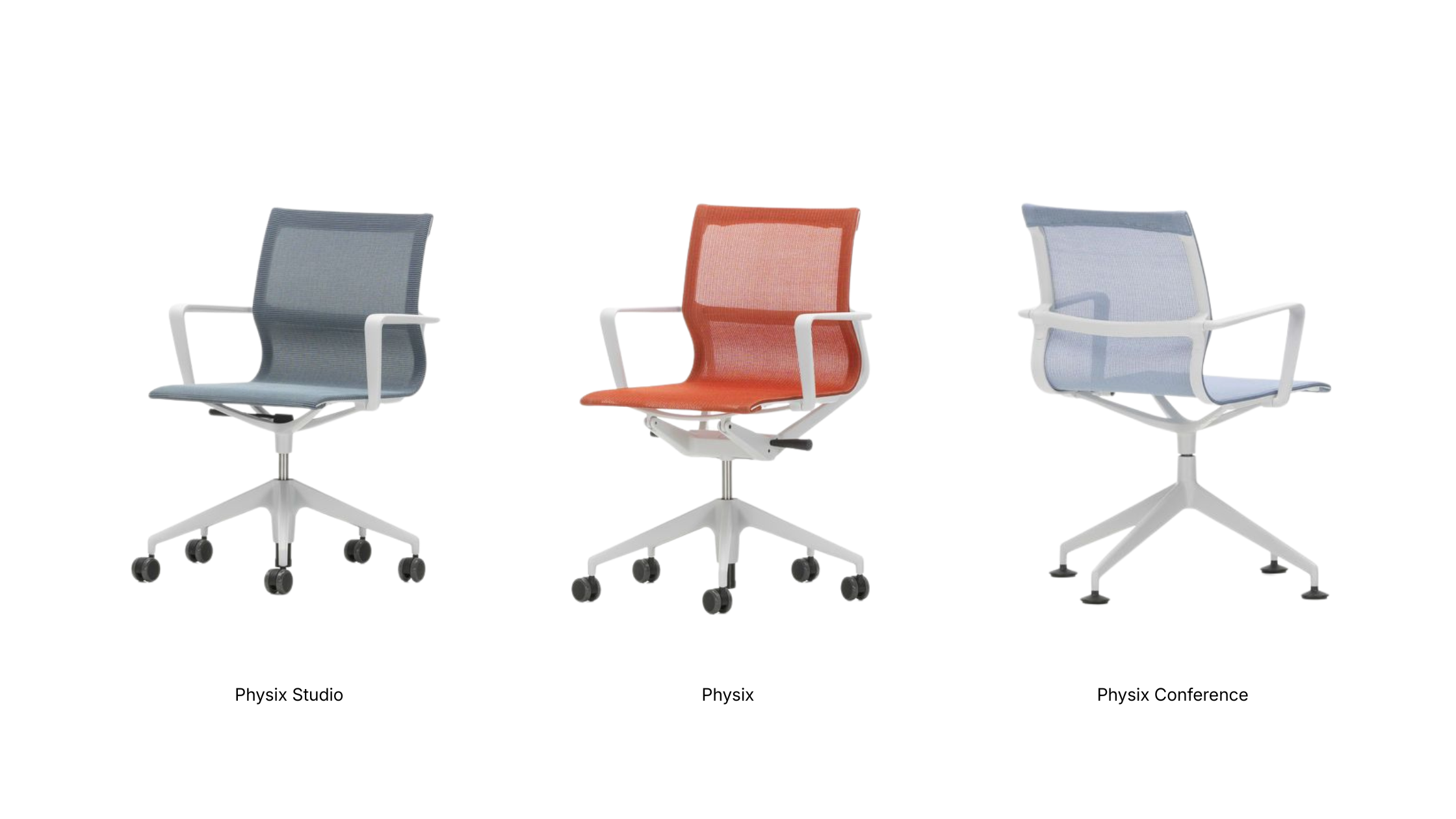
That distinction matters in commercial interiors. Visual consistency can help connect different areas of a workplace, but selecting furniture still requires attention to the activity at each seat. A chair’s family resemblance is one part of the decision; the functions of the specified model are another.
There is also a compositional question. Office chairs are frequently repeated across a floor. Their backs, arms and bases become a recurring pattern within the interior. Evaluating one chair in isolation can miss how strongly that repetition contributes to a room’s character. A useful design review therefore moves between three scales: the detail, the seated person and the surrounding space.
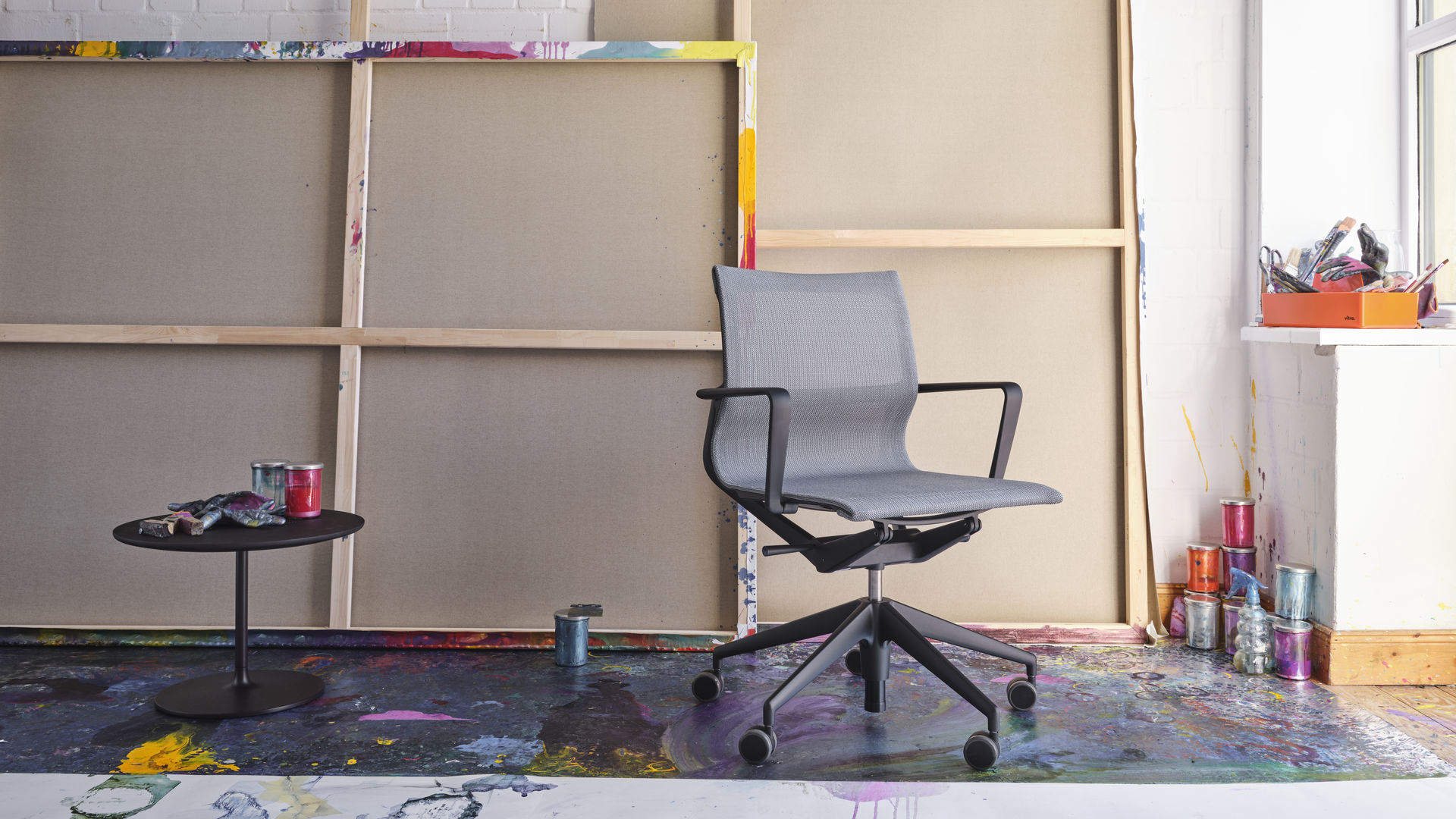
Physix provides a clear starting point for that review. Look at how the textile meets the frame. Consider the functions of the particular model. Then step back and assess its presence alongside the desks, tables and other furnishings.
The value of this approach extends beyond one chair. It asks us to judge furniture through the connection between appearance, construction and use. A photograph begins the conversation. Understanding the design requires looking at what happens next.
Explore Vitra office seating with Vinoti.
Vinoti | VIVERE Commercial