

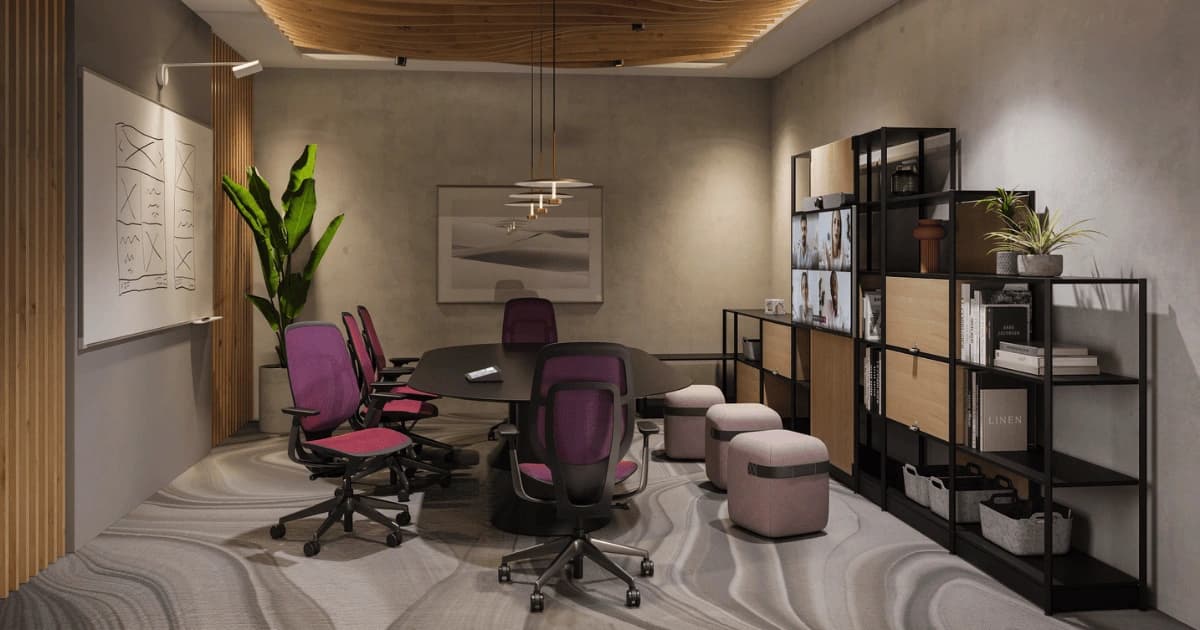
Before the pandemic, a “modern” workplace was defined by its ability to support collaboration, focus, and connection—spaces that enabled people to do their best work together. As businesses reopen and teams gradually return to the office, priorities have shifted. Infection control, personal safety, and wellbeing are now fundamental elements of workplace design.
Why does this matter? Because employees need more than policies—they need environments where they feel safe, supported, and confident. A workplace that addresses physical health, mental comfort, and emotional reassurance allows people to focus, collaborate, and perform without constant concern.
A safe post-pandemic workplace should support employees in three key ways:
Physically, by reducing exposure risks and promoting hygiene
Mentally, by minimizing anxiety that can disrupt focus and productivity
Emotionally, by demonstrating that the organization genuinely prioritizes employee wellbeing
Beyond health protocols, there are three core design principles that shape safer workplaces today.
1. Managing Density
Density refers to the number of people within a given area. Reducing crowding is essential in open offices, meeting rooms, cafés, and lounges. A minimum distance of two meters between individuals should be maintained wherever possible. Many organizations achieve this through staggered schedules, hybrid work arrangements, and revised seating patterns that avoid face-to-face positioning.
2. Dividing Space Thoughtfully
When distancing alone isn’t enough, spatial division becomes critical. Panels, screens, and movable partitions help define personal zones without fully isolating employees. These elements should be made from materials that are durable and easy to clean, ensuring both hygiene and long-term usability.
3. Rethinking Layout
Furniture layout plays a major role in how people move and interact within a space. Linear desk arrangements reduce direct face-to-face contact, while reconfigured lounge seating maintains comfort without compromising distance. In shared areas, visual cues—such as floor markings or directional arrows—help guide circulation and prevent unnecessary cross-traffic.
Meeting spaces also require special attention. Limiting capacity in enclosed rooms and shifting larger discussions to open or semi-open areas can significantly reduce risk. Flexible furniture, mobile whiteboards, and lightweight partitions allow spaces to adapt quickly as needs change.
Additional strategies include:
Adding spatial dividers using storage units or greenery
Separating sofas, chairs, and tables in informal areas
Retrofitting existing furniture configurations rather than replacing them entirely
At Vinoti, post-pandemic workplace design is approached through three key principles: options, offering flexible furniture solutions; trend, responding to evolving design needs; and wellness, prioritizing ergonomics and healthy materials. This integrated approach ensures workplaces are not only safer, but also comfortable, adaptable, and future-ready.
As work patterns continue to evolve, the office remains an important space for collaboration and culture. With thoughtful design and intentional planning, it can also be a place where people feel secure returning—ready to reconnect, contribute, and move forward together.
Vinoti | VIVERE Commercial