


How Research, Performance, and Integration Shape Better Commercial Environments
Commercial spaces today are measurable assets.
Across corporate, hospitality, education, and public sectors, spatial design has evolved beyond aesthetics into a domain shaped by behavioral science, ergonomics, acoustics, and sustainability research. Organizations increasingly recognize that the physical environment directly influences productivity, well-being, collaboration, and long-term operational performance.
Designing spaces people want to be in is therefore not a stylistic exercise; it is a research-driven strategy. As a part of VIVERE Commercials, Vinoti specializes in translating global workplace research into practical spatial solutions suited to the Indonesian market. Rather than approaching projects through individual products alone, Vinoti views commercial environments as integrated systems that combine ergonomic design, acoustic performance, spatial flexibility, and durable material infrastructure.
To support this approach, Vinoti collaborates with internationally recognized manufacturers including Steelcase, Vitra, JEB, Ekous, Milliken, Framery, and Grado. These collaborations allow global research and innovation to be implemented in ways that respond to local operational needs.
This paper outlines key principles for designing commercial environments that support human performance while delivering long-term spatial value.
The Human Factor: Environmental Psychology and Workplace Performance
Decades of research in Environmental Psychology demonstrate that physical surroundings significantly influence how people think, feel, and interact within a space. Studies consistently show that workplace environments can affect:
Cognitive load
Emotional well-being
Collaboration behavior
Stress levels
Employee retention
Among the strongest predictors of workplace satisfaction are autonomy, privacy control, and physical comfort. When individuals are able to choose how and where they work, productivity and engagement often improve.
For this reason, contemporary workplaces increasingly accommodate multiple modes of work, including:
Focused individual tasks
Collaborative ideation
Confidential discussions
Informal social interaction
Vinoti approaches workplace planning with this behavioral diversity in mind, ensuring that spatial environments support different activities rather than forcing a single working style.
Ergonomics and Biomechanics: Supporting Physical Well-being at Work
Musculoskeletal discomfort remains one of the most common occupational health concerns globally. Extended static sitting, inadequate adjustability, and poor posture can lead to long-term strain, reduced comfort, and decreased workplace performance.
Vinoti incorporates ergonomic research into workplace planning by prioritizing seating systems and workstation configurations that support movement, posture variation, and long-term physical comfort.
Workplace research conducted by organizations such as Steelcase has demonstrated that people naturally shift between multiple seated positions throughout the day. Ergonomic systems therefore benefit from supporting posture diversity, encouraging micro-movements, and providing adjustable features that accommodate different body types.
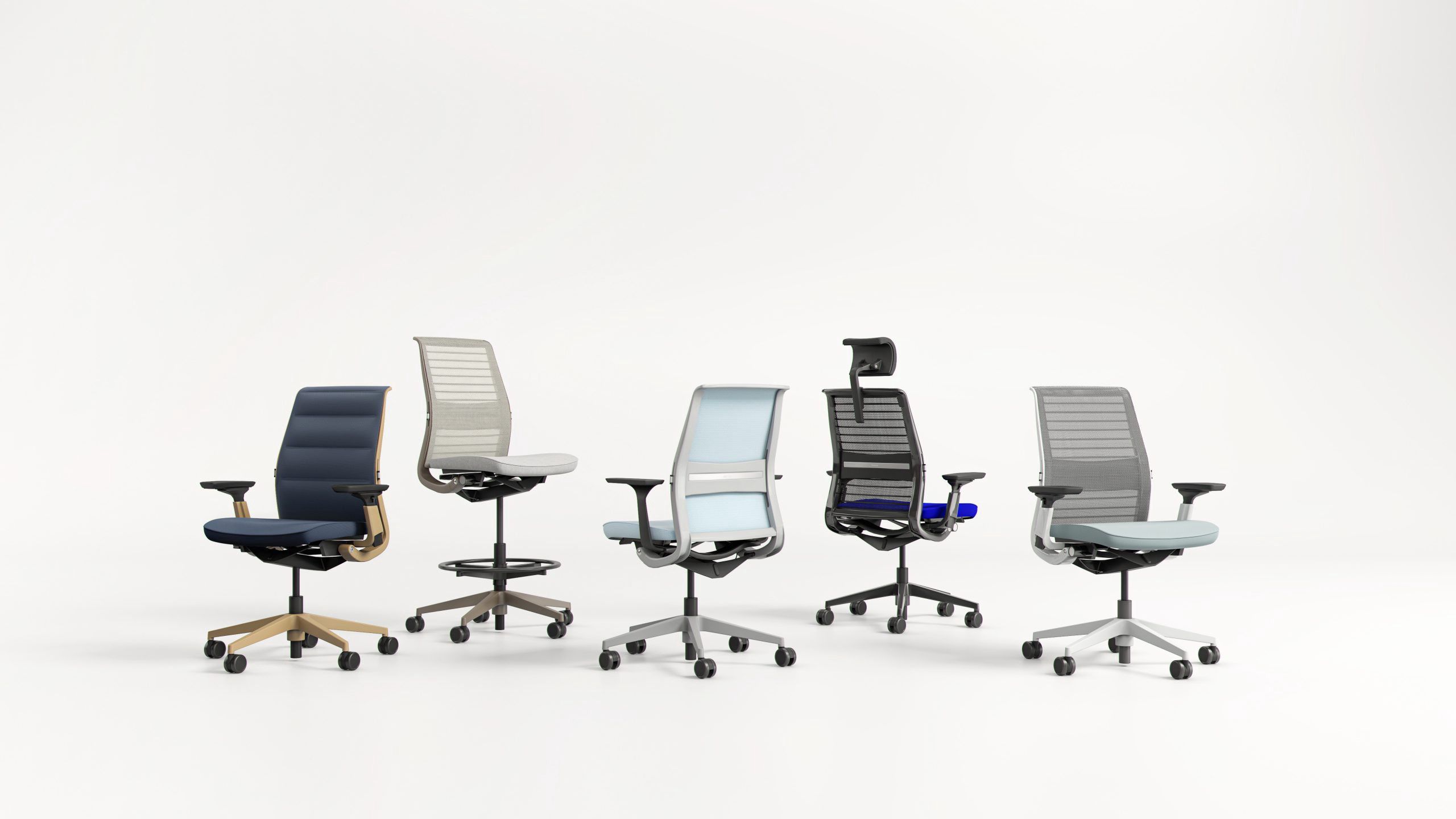
At the same time, design culture and product longevity play an important role in workplace environments where aesthetics and identity are equally important. Manufacturers such as Vitra explore the relationship between biomechanics, high-quality materials, and long-term usability through collaborations with designers and ergonomists.
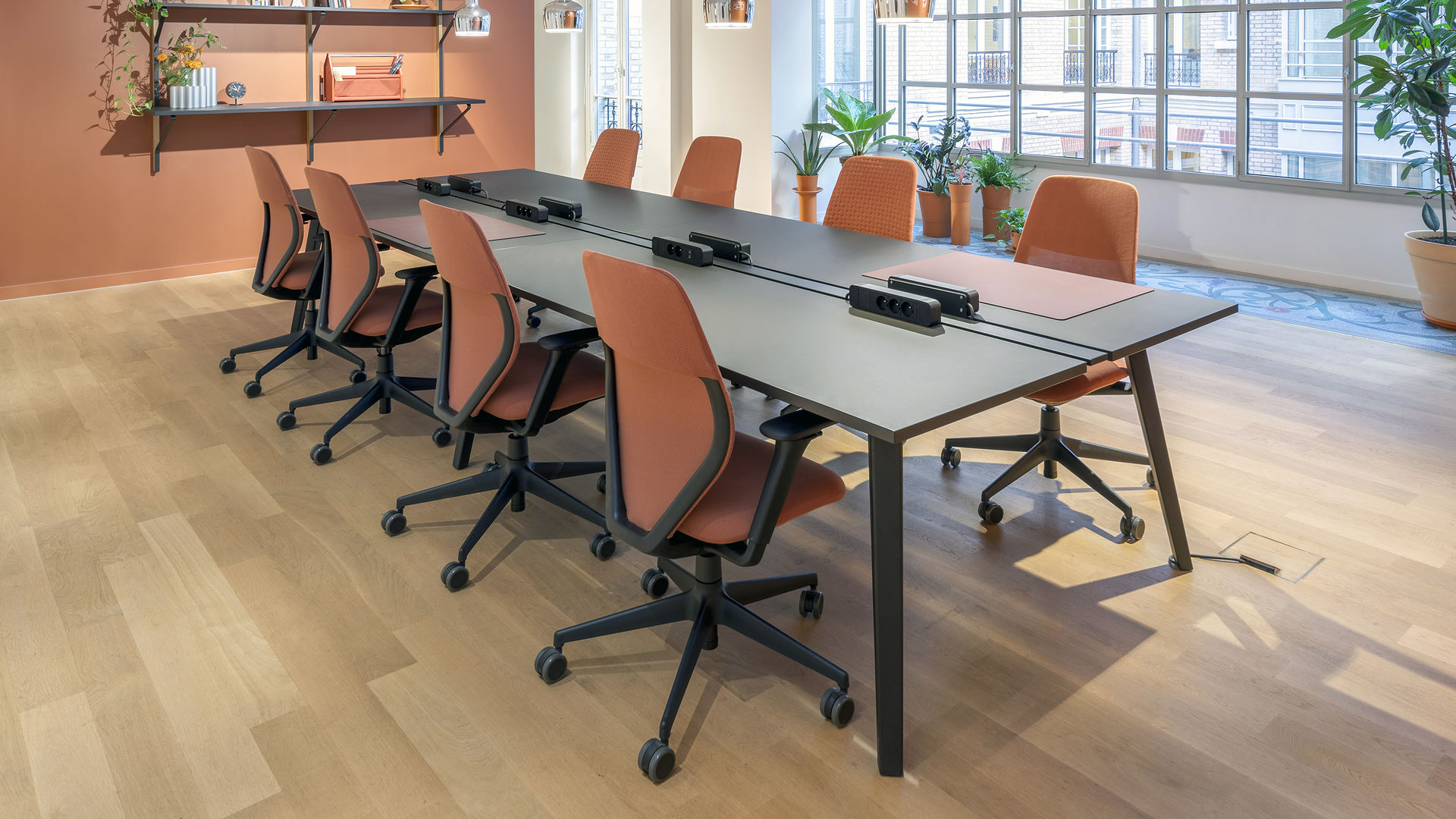
By evaluating work patterns, spatial layout, and user needs, Vinoti integrates these research-driven systems into environments that balance comfort, design quality, and organizational performance.
Acoustic Intelligence: Managing Sound in Collaborative Environments
Open-plan layouts remain widely used because they support collaboration and maximize spatial efficiency. However, uncontrolled noise is consistently identified as one of the most significant sources of workplace distraction. Research in Cognitive Neuroscience shows that intermittent speech and unpredictable background noise can disrupt concentration and reduce task accuracy.
Vinoti addresses these challenges by incorporating acoustic planning into the early stages of spatial design. Effective acoustic strategies typically combine architectural treatments with spatial zoning to create environments that balance collaboration and focus.
Acoustic materials developed by manufacturers such as Ekous help reduce reverberation and improve sound absorption within interior environments. In open workplaces where additional privacy is required, enclosed focus spaces such as those developed by Framery provide controlled acoustic environments for calls, meetings, and concentrated work.
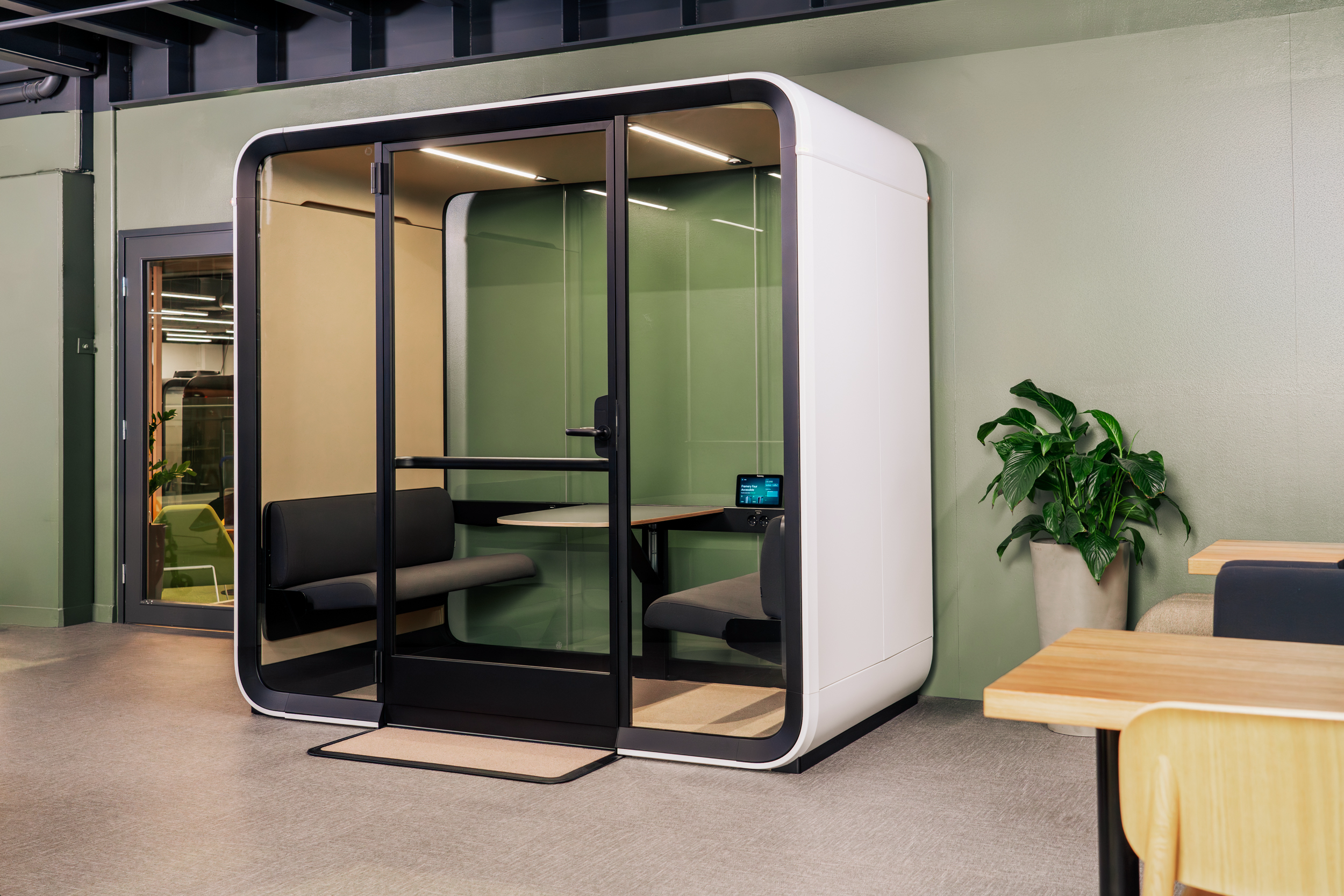
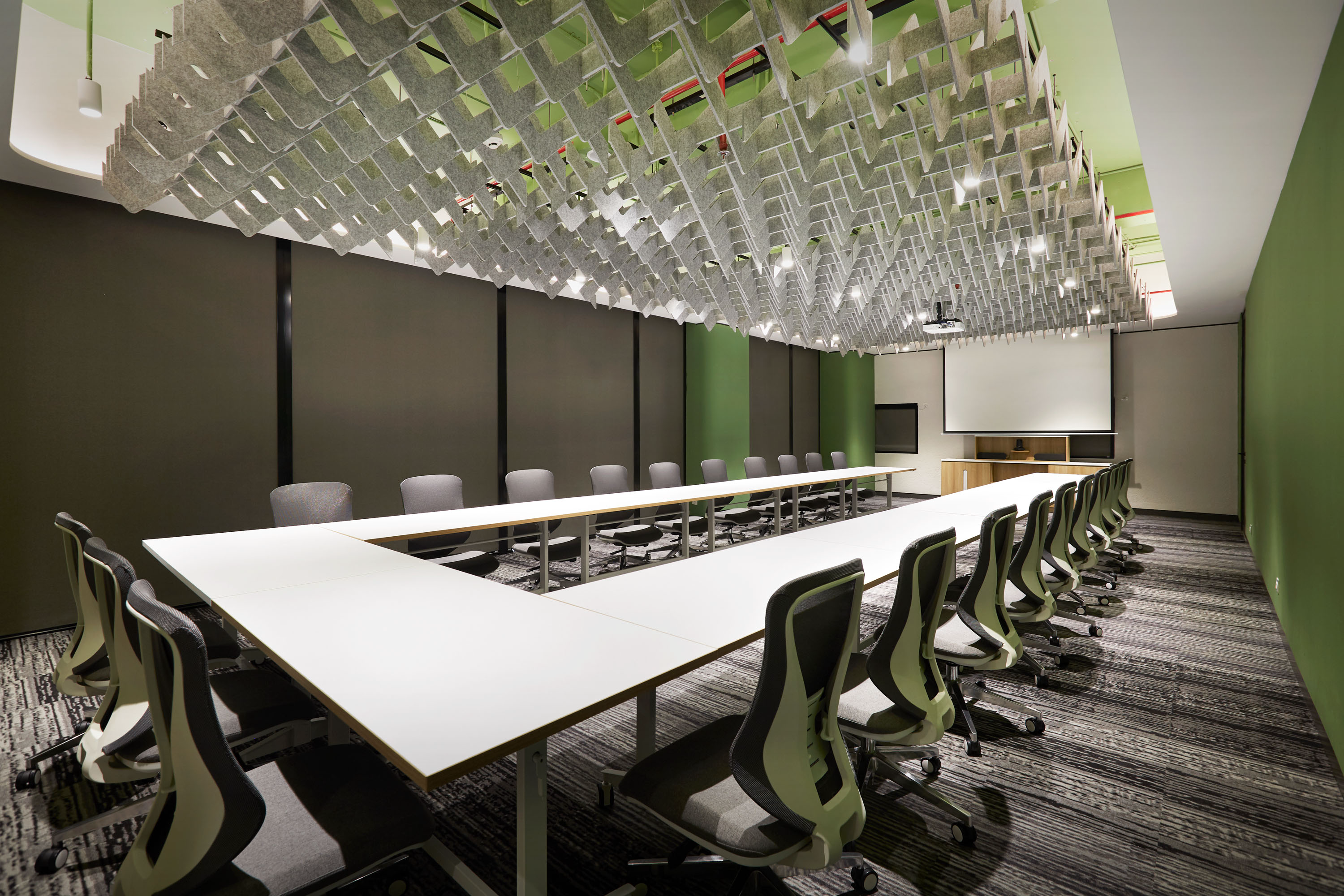
When acoustic strategy is integrated early in the project lifecycle, organizations benefit from improved concentration, greater speech privacy, and a more comfortable overall environment.
Spatial Flexibility and Organizational Agility
Modern organizations evolve continuously. Teams expand and contract, departments reorganize, and workplace strategies adapt to new ways of working. Rigid spatial layouts often struggle to accommodate these changes. Vinoti approaches workplace planning with adaptability as a core principle, designing environments that can evolve alongside organizational needs.
Modular partition systems, such as those developed by JEB, provide a balance between acoustic performance, visual transparency, and flexibility. These systems allow spaces to be reconfigured without major structural modifications. Adaptable environments can support:
Scalable workplace growth
Faster spatial reconfiguration
Reduced operational disruption during change
This flexibility enables organizations to maintain efficient use of space over time.
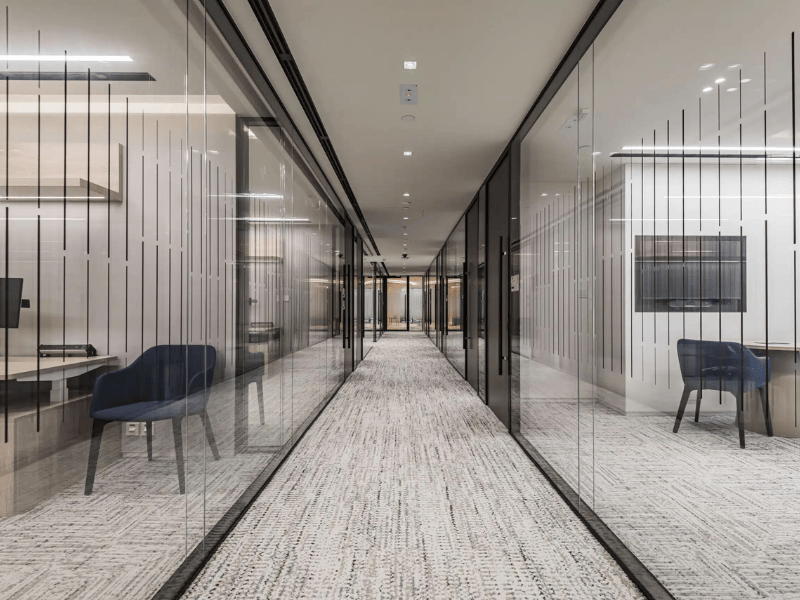
Flooring as Performance Infrastructure
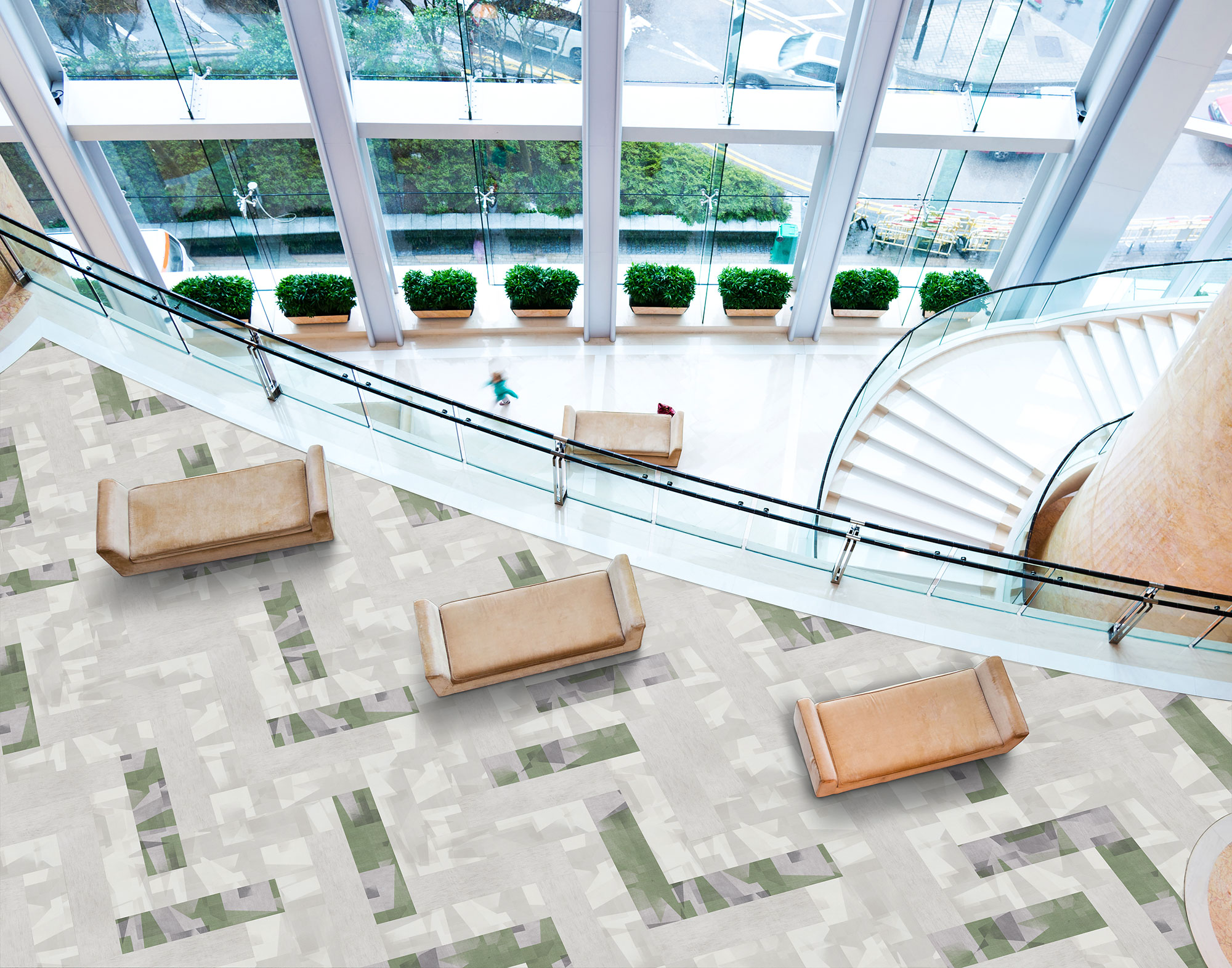
Flooring is often perceived as a purely aesthetic component of interior design. In reality, it plays a significant role in environmental performance, influencing acoustics, indoor air quality, durability, and long-term maintenance requirements.
Vinoti treats flooring as part of the overall performance infrastructure of a commercial environment. Material selection must consider lifecycle impact, sustainability, and operational durability.
Manufacturers such as Milliken integrate advanced materials science and environmental research into their flooring systems, emphasizing carbon transparency, responsible sourcing, and long-term performance.
From an operational perspective, well-specified flooring contributes to:
Reduced acoustic reflection
Improved indoor environmental quality
Lower long-term replacement and maintenance costs
As a result, flooring becomes a foundational component of high-performing commercial interiors.
Versatility Across Commercial Sector
Different sectors require distinct spatial priorities. Corporate workplaces typically focus on productivity, collaboration, and employee well-being. Hospitality environments prioritize comfort and memorable experiences. Educational institutions demand durability and flexibility, while public environments require resilience and accessibility.
Vinoti works across these sectors by combining spatial planning expertise with adaptable furnishing systems suited for diverse operational contexts. Manufacturers such as Grado provide modular solutions designed for high-traffic environments where durability and flexibility are essential.
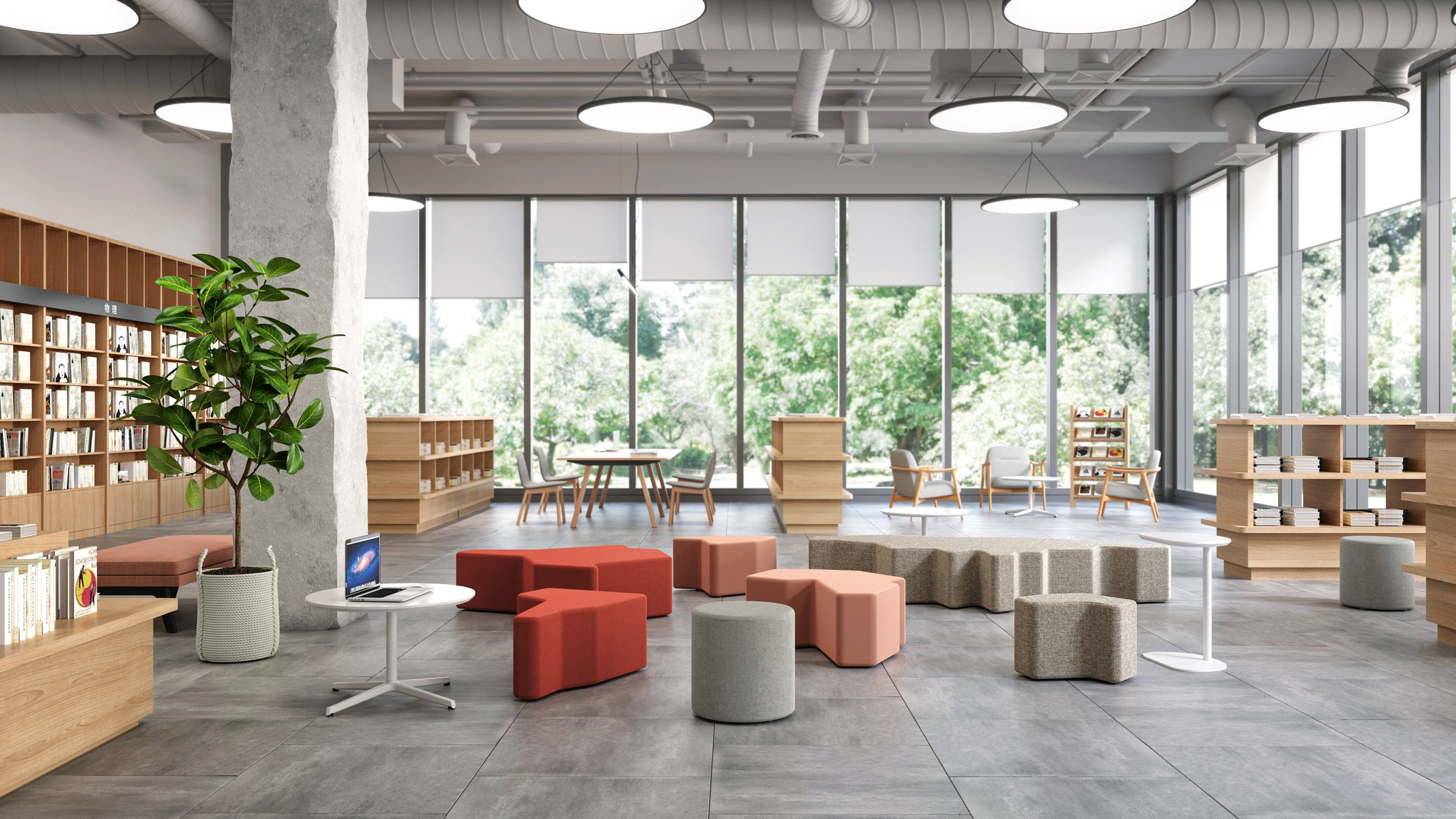
By integrating global product innovation with local operational insight, Vinoti ensures that commercial environments respond effectively to Indonesian climate conditions, usage patterns, and budget considerations.
Sustainability and ESG Alignment
Environmental responsibility has become a central consideration in commercial development. Organizations increasingly evaluate interior environments based on sustainability metrics and long-term environmental impacts.
Leading manufacturers now align their development strategies with:
Carbon reduction commitments
Circular economy principles
Sustainable material innovation
Transparent supply chains
By collaborating with manufacturers that invest in environmental research and lifecycle accountability, Vinoti helps clients align their projects with international sustainability standards and ESG goals. In this context, sustainability is not simply a design feature; it is a long-term operational strategy.
Integration as Strategic Advantage
Commercial interior projects involve multiple stakeholders, including architects, consultants, contractors, procurement teams, and manufacturers. When decisions are fragmented, spatial performance often becomes inconsistent.
Vinoti's core value lies in integration. Rather than focusing on individual products, Vinoti aligns multiple performance factors within a single commercial environment; ergonomic workplace systems, acoustic planning and sound management, flexible spatial infrastructure, high-performance materials and flooring, brand identity and user experience.
Through this integrated approach, global research and product innovation are translated into environments that function effectively within real operational conditions.
From Furnishing to Performance Strategy
Designing spaces people want to be in is ultimately a strategic decision.
Research consistently shows that spatial environments influence productivity, well-being, collaboration, brand perception, and long-term operational costs. By combining spatial expertise with research-driven manufacturing partners, Vinoti helps organizations create environments that are not only visually compelling but measurably effective.
Because when space supports people, performance follows.
Vinoti | VIVERE Commercials
Great Spaces. Great People.
References
The perspectives presented in this paper draw from research in workplace strategy, ergonomics, environmental psychology, and sustainable building design. Key references include:
Gensler – Workplace Survey research on workplace experience, productivity, and collaboration.
Leesman – Global workplace effectiveness studies on how environments support employee performance.
World Green Building Council – Research on the relationship between healthy buildings, well-being, and productivity.
International WELL Building Institute – Standards focused on health and human performance in built environments.
Insights from industry research and product development by leading manufacturers also inform the strategies discussed in this paper, including Steelcase, Vitra, Framery, Milliken, JEB, Ekous, and Grado.